
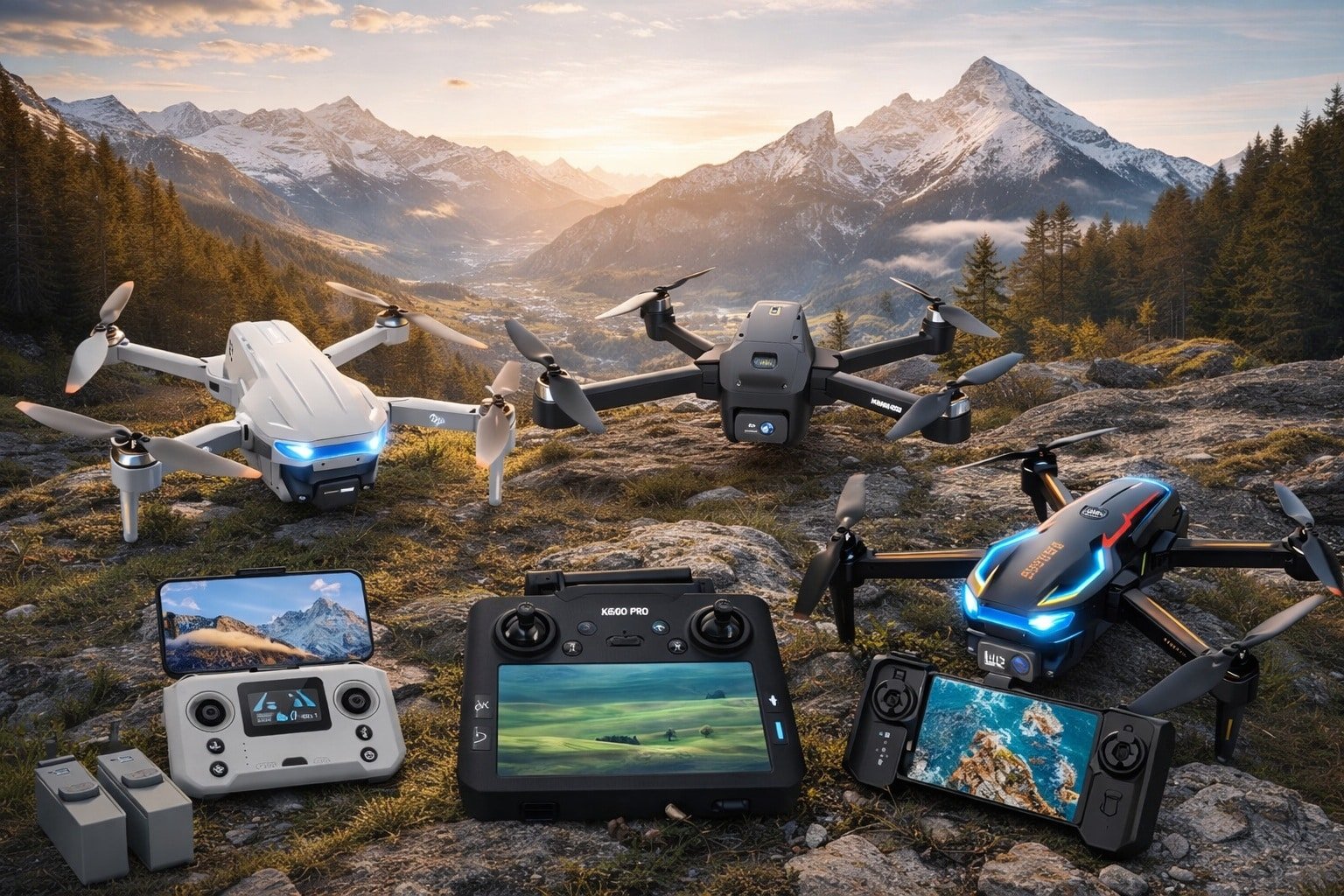
The Best Drones for Professional Photography deliver sharp 4K+ images, stable footage, and smart GPS.
You want aerial shots that win clients and wow your audience. But picking the right drone feels tricky. Flight times, range, gimbals, sensors, and GPS all matter. If you shoot real estate, weddings, travel, or social ads, the right tool saves time and boosts your results.
In this guide, I review and compare top picks for different needs and budgets. I also share field tips, legal notes, and what to avoid. By the end, you’ll know exactly which drone will help you shoot with confidence.

Oddire Drones with Camera for…
【Intelligent GPS Technology】With the advanced GPS module, our Oddire drone with camera will automatically return home when battery runs low or the connection breaks up, so you’ll never worry about…

GPS Drone with EIS Camera…
GPS Drone with 4.5 Inch Screen on Controller: The GPS drone long range remote features a 4.5 inch HD display for real-time transmission, instantly previewing footage and capturing every moment….

Drone with Camera for Adults,…
【2K Ultra HD Camera】Loiley drone features a high-quality 2K HD camera with a 90° remote adjustable angle, allowing you to capture breathtaking photos and ultra-clear videos from the sky. Whether…
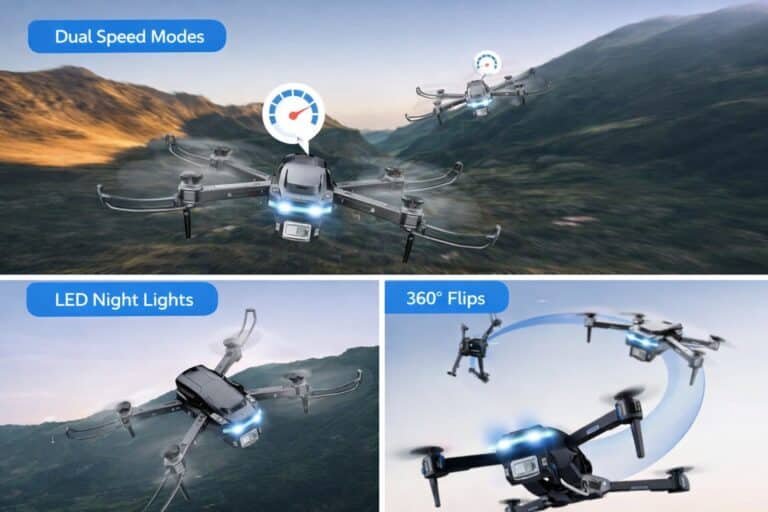
Oddire 4K GPS Foldable Drone (249g)
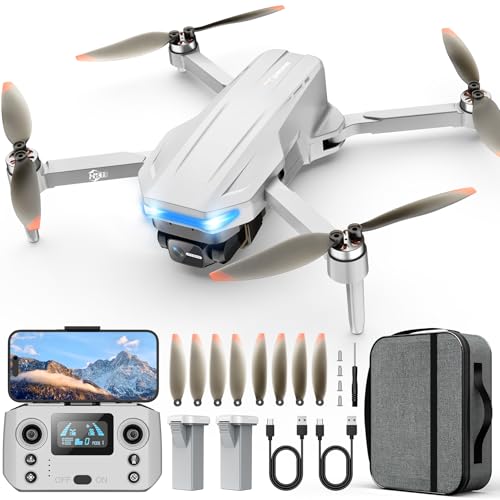
This compact drone aims at creators who want 4K clarity without a heavy bag. It weighs only 249g, so it is easy to carry and fast to deploy. GPS Auto Return, Waypoint Flight, and Orbit let you frame repeatable shots with less fuss. The brushless motors help with wind resistance and smooth flight lines.
I like the blend of smart modes and a foldable frame here. You get Follow Me and Gesture Control for solo shoots. The package lists up to 48 minutes total across two batteries, which helps on set. For new pros on a budget, this is a friendly way to unlock aerial angles.
Pros:
- Light 249g build for easy travel and quick takeoff
- 4K camera paired with EIS for steadier footage
- GPS features: Return to Home, Waypoints, Orbit, Follow
- Brushless motors handle breezes better than brushed
- Two batteries included for longer sessions
Cons:
- Likely a fixed aperture lens limits low-light control
- EIS can crop image; a true 3-axis gimbal would be better
- Image profiles are basic compared to higher-end drones
My Recommendation
If you want a starter tool to build a portfolio, the Oddire 4K GPS Foldable Drone does the job. It fits the Best Drones for Professional Photography list for entry-level work like real estate exteriors, travel reels, and social content. The flight modes save time on repeat shots. The small weight means you can carry it anywhere.
For paid clients, this makes sense if you need simple aerials at a fair price. If you often shoot in wind or low light, step up to a model with a 3-axis gimbal and larger sensor. For creators who need portability and smart flight, this is solid value and often in stock.
| Best for | Why |
|---|---|
| Travel creators | Light 249g body with foldable design |
| Real estate exteriors | Orbit and Waypoints for repeatable paths |
| Solo shooters | Follow Me and Gesture Control |
GPS Drone w/ EIS + 4.5-inch LCD Controller

This drone stands out with a 4.5-inch screen built into the controller. That saves you from phone glare and app crashes. EIS helps stabilize video, and AI Track plus Orbit modes help you frame moving subjects. The drone is listed under 249g, which keeps it light and nimble.
I value the screen-on-remote for fast setup. It is handy when you arrive on a job and just need to fly. Long-range claims are solid for line-of-sight work. For creators who are new to drones, the built-in display keeps things simple and steady.
Pros:
- Integrated 4.5-inch LCD for clear live view without a phone
- AI Track and Orbit for hands-off framing
- GPS Return to Home for safety
- Lightweight for fast transport
- EIS for smoother, watchable footage
Cons:
- No 3-axis gimbal; stabilization is software-first
- Camera specs may trail prosumer flagships
- Limited color profiles for grading
My Recommendation
If you film fitness, bikes, or runners, this drone can track subjects without fuss. It belongs on the Best Drones for Professional Photography short list for solo content creators who need quick setup. The bright controller screen is a real perk for sunny shoots.
Use it for short ads, social clips, and scenic B-roll. If you grade footage or shoot in tricky light, consider a gimbal model with a bigger sensor. For fast on-site work where reliability matters, this is a nice, simple choice.
| Best for | Why |
|---|---|
| Outdoor fitness clips | AI Track keeps subjects centered |
| Bright sun shoots | Built-in screen beats phone glare |
| New drone pilots | Easy setup, light, GPS safety |
2K FPV Camera Drone for Adults (Beginner)

Think of this as a training drone that also shoots. It offers 2K FPV video, Altitude Hold, and One-Key Takeoff/Landing. You also get speed settings and Headless Mode to learn controls. Two batteries stretch practice time without breaking focus.
I use training drones to master flight paths and no-fly habits. This one feels tuned for beginners who want to learn and still record passable footage. It is not a pro camera, but it builds your skills fast. That makes it a smart stepping stone to more advanced rigs.
Pros:
- Easy controls: One-Key launch, Altitude Hold
- 2K video is fine for practice and social clips
- Two batteries keep you flying longer
- Headless Mode reduces pilot confusion
- Budget-friendly path to steady hands
Cons:
- Not 4K; limited detail and dynamic range
- No 3-axis gimbal; shots can look less cinematic
- Basic transmission range and features
My Recommendation
If you are new and want safe, cheap flight time, start here. It is not the most advanced in the Best Drones for Professional Photography category, but it is the most forgiving. Learn stick control, wind reading, and return protocols without stress.
Once you can fly figure-eights and smooth orbits, you will land more keepers on paid gigs. Use this to sharpen skills and save your pro drone’s batteries. For the price, it is a great training partner that still records usable clips.
| Best for | Why |
|---|---|
| New pilots | Simple controls and stable hover |
| Practice flights | Two batteries, light frame |
| Social posts | 2K video is fine for quick shares |
4K EIS GPS Drone + 5-inch Screen (70 Mins)

This drone adds a larger 5.0-inch screen to the controller and claims up to 70 minutes of total flight across batteries. It offers 4K video with EIS, GPS safety, and long-range transmission. AI Track, Orbit, Follow Me, and Auto Return keep shots guided and safer. The foldable frame and sub-249g design are ideal for travel.
I like this as a nimble tool for aerial B-roll between main camera setups. The screen makes it a pure grab-and-go system. EIS helps, though a 3-axis gimbal would be better for low, lateral moves. For on-the-go content, the package is balanced and easy to use.
Pros:
- 5-inch screen on remote for clear, simple monitoring
- 4K recording with EIS for smoother footage
- Smart modes: AI Track, Orbit, Follow, RTH
- Long combined flight time with two batteries
- Lightweight, foldable, and travel-ready
Cons:
- No mechanical 3-axis gimbal
- Likely 8-bit color; limited grading headroom
- Performance can dip in strong winds
My Recommendation
If you shoot events, festivals, or travel reels, this is a flexible pick. It earns a place among the Best Drones for Professional Photography for creators who value portability and quick deployment. The bigger screen is a true time-saver on sunny days.
Use it as a secondary angle or a fast scout. If you want cinematic motion and low-noise twilight shots, aim for a gimbal and larger sensor. For most daylight content, this strikes a sweet spot of features and ease.
| Best for | Why |
|---|---|
| Event B-roll | Quick setup and smart flight modes |
| Travel creators | Compact, foldable, long flight time |
| Sunny shoots | Bright 5-inch controller display |
4K GPS Drone with 3‑Axis Gimbal (1640ft)

This model brings a key upgrade: a 3-axis gimbal. That is huge for smooth, cinematic moves. You get a 4K UHD camera, GPS Return to Home, Follow Me, and app/remote control. The listed range is 1,640 ft, which fits most line-of-sight jobs.
I suggest 3-axis gimbals for paid shoots, even on a budget. They unlock those slow, buttery pans that clients love. The gimbal also helps in wind and during lateral passes. If you want a low-cost path to pro-looking footage, this checks the box.
Pros:
- True 3-axis gimbal improves video stability a lot
- 4K UHD detail for sharp photos and clips
- Follow Me and Auto Return for safer ops
- App or remote control options
- Good value for gimbal-equipped aerials
Cons:
- Shorter range than some flagship systems
- May lack advanced color profiles (LOG/10-bit)
- Low-light still not on par with 1-inch sensors
My Recommendation
If you want the biggest jump in quality per dollar, start with a 3-axis gimbal drone like this. It belongs near the top of the Best Drones for Professional Photography for budget pros. Those stable moves will lift your reels and listings right away.
It is great for real estate, roof surveys, and brand B-roll. You get more keepers with fewer takes. If you crave advanced codecs, you will need a pricier rig. But for clean, stable 4K at a fair price, this is hard to beat.
| Best for | Why |
|---|---|
| Real estate video | 3-axis gimbal for smooth fly-bys |
| Marketing B-roll | Sharp 4K with stable motion |
| Budget filmmakers | Cinematic look at low cost |
The Photographer’s Guide to Drones (Book)

This book gives you a foundation in aerial photography and smart flight. It covers gear basics, camera settings, composition, and safety. You also learn how to plan flights and read conditions. For creatives who like learning by reading, it is a helpful guide.
I consider books like this a force multiplier. The best drone is only as good as your taste and process. A solid guide helps you spot patterns faster and protect your gear. Pair it with a budget drone to speed up your growth curve.
Pros:
- Clear overview of aerial photography basics
- Practical tips on flight planning and safety
- Helps you set exposure and white balance right
- Improves your compositions and story sense
- Good value for long-term skill building
Cons:
- Some brand models evolve faster than print cycles
- Learning still needs field practice
My Recommendation
If you want to climb faster, get this with your first drone. It supports your work with the Best Drones for Professional Photography by teaching the “why” behind each move. You will make fewer mistakes and build better habits.
It is ideal for new and mid-level creators who want structure. Read a chapter, then fly and test the tip. The small cost pays off in better shots and safer flights.
| Best for | Why |
|---|---|
| Beginners | Clear steps to safe, smart flying |
| Self-taught pros | Fills gaps in camera technique |
| Portfolio builders | Improves composition and shot lists |
Bingchat 4K Drone, 3‑Axis, Laser OA, 19,000ft Range

This drone stacks high-end features: a 3-axis gimbal, 360° laser obstacle avoidance, and a large touch-screen remote. It lists a huge 19,000 ft range, 70 minutes total flight across batteries, and GPS Follow Me with Auto Return. The 4K camera and 50x zoom claim flexibility from wide to tight shots. A 32GB SD card is included to get you started fast.
I look for obstacle avoidance when flying tight spaces. It adds a safety net around trees and facades. A true 3-axis gimbal here means smoother, cinematic motion lines. With long-range transmission and a beefy remote, this is built for more serious field work.
Pros:
- 3-axis gimbal for stable, pro-style footage
- 360° laser obstacle avoidance adds safety
- Long-range control and clear touch screen remote
- GPS Follow Me and Auto Return for ease
- Large claimed flight endurance with two batteries
Cons:
- Zoom is likely digital; quality drops at extreme levels
- Heavier and bulkier than ultra-light drones
- Actual range depends on local interference and line of sight
My Recommendation
If you work near trees, buildings, or crowds, this is a safer pick. It fits well in the Best Drones for Professional Photography when you need obstacle avoidance and steady gimbal footage. Real estate, resorts, and campus tours will benefit right away.
It is a strong all-rounder for content teams and solo pros. If you want the best chance at smooth, confident flight, this is worth a look. For the features on offer, the value is compelling and often available.
| Best for | Why |
|---|---|
| Real estate pros | Obstacle avoidance near facades |
| Campus/resort tours | 3-axis gimbal for cinematic motion |
| Safety-first flyers | 360° OA plus GPS RTH |
How to choose the Best Drones for Professional Photography
Great drone photos come from a mix of camera quality, stable motion, and smart flight. You do not need every feature. You need the right set for your jobs. Here is how I break it down in the field.
Sensor and optics matter most for stills. A larger sensor with a sharp lens gives cleaner files. Look for 4K or higher video if you deliver clips. Smooth motion comes from a 3-axis gimbal, not EIS alone.
Smart modes reduce stress on site. Orbit, Waypoints, and Follow Me help you repeat a shot. GPS with Return to Home prevents flyaways. Good transmission keeps your feed clean in cluttered places.
Battery life is real time saved. I pack at least two batteries on every job. Wind resistance helps hold lines for lateral moves. Build quality should feel tight with little arm play.
Finally, check legal needs. Under FAA Part 107 in the US, register your drone for commercial work. Remote ID is required if your drone must be registered. Always fly line of sight and obey local rules.
How I test and rank the Best Drones for Professional Photography
I test drones like I shoot paid work. That means sunrise light, mid-day wind, and sunset contrast. I check focus, detail, and dynamic range in common scenes. I review color casts and white balance in shade and sun.
I fly repeat paths to judge stability. I run lateral slides and backward orbits to stress the gimbal. I watch for micro-jitter and roll drift. I test GPS Return to Home and fail-safes on low battery.
I time setup from bag to launch. I note app crashes, screen glare, and pairing issues. I check battery wear over cycles. I also test how fast I can teach a new pilot to get a clean shot.
For ranking, I weigh three pillars: image quality, flight stability, and reliability. Price and support also count. Products that balance these pillars rise to the top of the Best Drones for Professional Photography list.
Camera features that matter on pro shoots
Bit rate and codec affect how well files hold up in edit. H.265 is often cleaner at smaller sizes than H.264. If your drone has flat color or LOG, you gain grading room. If it is 8-bit only, expose well to avoid banding.
Shutter control is key for motion. Use ND filters to hit a 180-degree shutter rule for video. That keeps motion blur natural. For stills, shoot RAW if possible for better highlight and shadow recovery.
Focus and sharpness should be even across the frame. Watch edges and corners. A wide lens is nice for landscapes, but mind distortion near the sides. Horizon tilt is a common gimbal issue; run calibration often.
Flight features that reduce stress
Waypoint and Orbit save time for repeat shots and client revisions. Follow Me helps solo shooters stage dynamic moves. Obstacle avoidance adds a safety layer near trees and buildings. It is not magic, but it helps.
Wind resistance is not a buzzword. It protects your lateral moves from wobble. Brushless motors last longer and run cooler. A strong link keeps your video feed steady and readable.
Return to Home is a must. Set a safe RTH altitude above trees and structures. Check home point updates if you move after takeoff. A good RTH saves your day when batteries dip or signal drops.
Safety, laws, and best practices
In the US, if you fly for business, you need FAA Part 107. Under Part 107, your drone must be registered, even under 0.55 lb. Drones that must be registered also need Remote ID, unless flying in a FRIA. Know airspace and use a current map app.
Fly line of sight and keep clear of people and moving cars. Do not fly near airports or restricted zones. Always check local and state laws before you launch. If a property owner asks you to land, be professional and comply.
Insurance helps. It protects you and your client. Use preflight checklists. Calibrate the compass and IMU when prompted. A few minutes of checks prevent costly errors.
Pro tips for better drone shots
Plan your story. Shoot wides to set the scene, mediums for detail, and close passes for drama. Mix altitude and angle for a richer cut. Avoid only straight-up top-down angles.
Use foreground. Fly past a tree limb or roof corner to add depth. Slow down your sticks to smooth moves. Use Tripod or Cine mode if available.
Shoot in the best light you can. Golden hour hides noise and adds shape. Mid-day sun can work for properties, but watch harsh shadows. If you must shoot mid-day, add a soft lateral slide to bring life.
Bracket stills when light is tough. Merge later to keep sky and ground. For video, expose for highlights to save the sky. Use zebras or histogram if your app has them.
Where these picks fit in the pro landscape
High-end cinema drones with big sensors are great, but they are pricey. The models in this list hit a sweet spot for many jobs. If your work is real estate, tourism, events, or social ads, you can deliver strong results. You do not need the most expensive rig to get hired.
The Best Drones for Professional Photography meet you where you are. A 3-axis gimbal model can carry your business far. Smart modes help you build repeatable shots. With good planning and practice, your reels will shine.
FAQs Of Best Drones for Professional Photography
Do I need a 3-axis gimbal for pro work?
Yes, if you want the smoothest video. EIS helps, but a 3-axis gimbal gives more stable and cinematic motion.
Is 4K required for clients?
Most clients expect 4K now. It gives headroom to crop and stabilize. For stills, sensor quality matters more than resolution alone.
Can I fly commercially without Part 107?
No. In the US, any business use needs FAA Part 107. You must pass the test and follow the rules.
Do sub-249g drones need Remote ID?
If you fly under Part 107, register your drone and comply with Remote ID. Recreational under 0.55 lb may be exempt from registration.
How many batteries should I bring?
At least two, but three is better. Extra batteries reduce stress and help you handle delays or retakes.
Final Verdict: Which Should You Buy?
If you want the biggest quality jump per dollar, pick the 4K GPS Drone with 3‑Axis Gimbal. It delivers stable, cinematic motion that clients notice.
Need more safety and range? The Bingchat 4K Drone adds 360° obstacle avoidance and a strong remote. Both sit high on the Best Drones for Professional Photography list for real-world jobs.
One Comment