
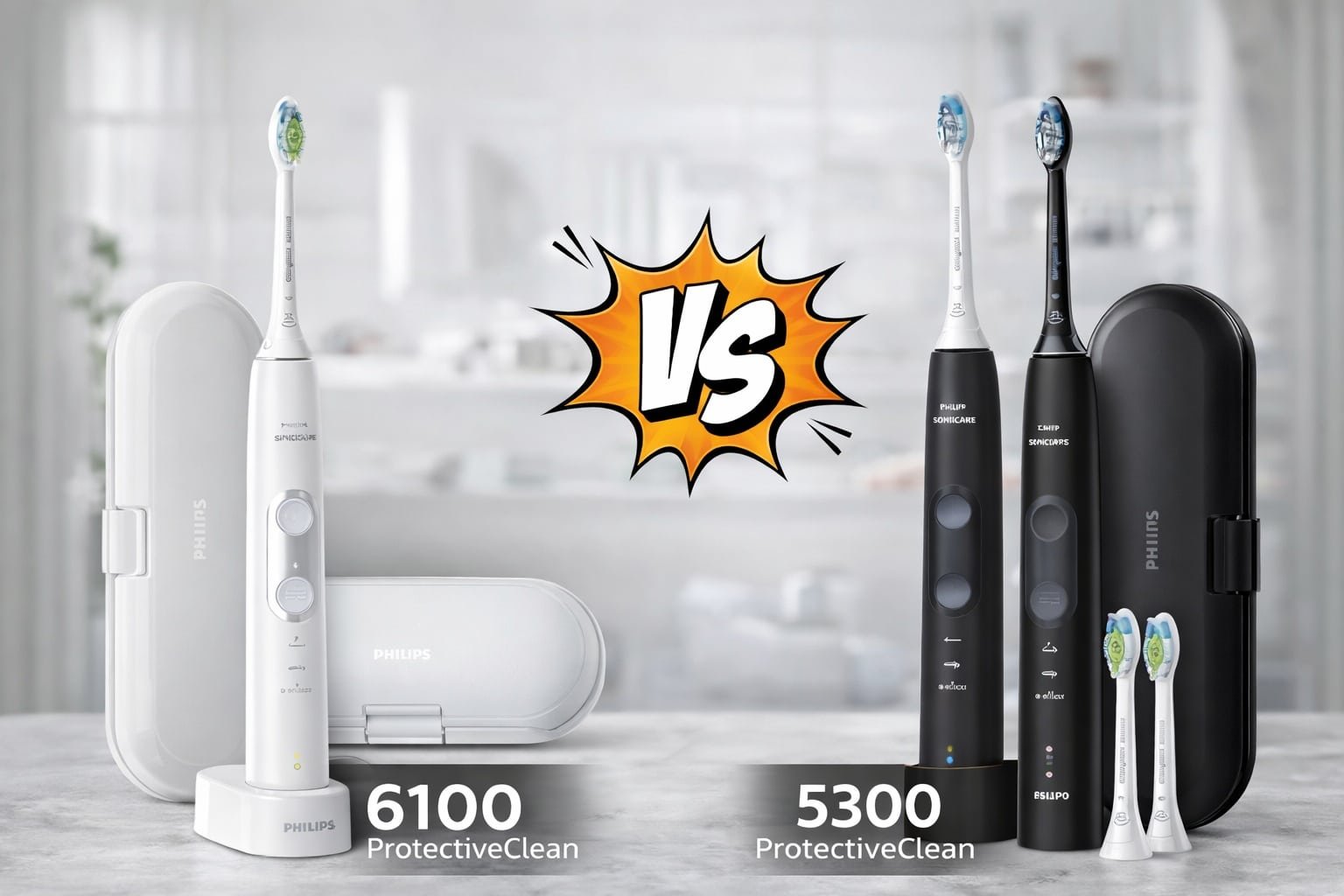
Both clean great; 6100 adds intensity control, while 5300 wins on value.
I’ve been the “toothbrush friend” for years, the one who gets asked which Sonicare to buy. The Philips Sonicare 6100 vs Philips Sonicare 5300 is the choice I get most. I’ve used both daily. They each shine in different ways. The 6100 gives finer control and a sleeker feel. The 5300 packs big value with extra heads. I’ll share how each handled my coffee habit, my hurried mornings, and my gum-care days so you can pick with confidence.
Is Philips Sonicare 6100 Good?
Yes—especially if you want control and a polished feel. The 6100 hits a sweet spot with three modes and three intensity levels. I found that control helpful when my gums felt tender one week and I still wanted a deep clean the next. It also has a pressure sensor, a QuadPacer, and BrushSync, which nudged me to replace the head at the right time. The result felt like a cleaner line along the gumline and fewer missed spots.
On stain-heavy weeks (hello, espresso), I’d switch to White mode, bump intensity up, and get that “just left the hygienist” slickness. On a busy work trip, the 14‑day battery and slim travel case were clutch. The handle feels refined, and the extra intensity settings made it easy to dial in comfort.
PHILIPS Sonicare ProtectiveClean 6100 Rechargeable Electric Toothbrush, with Pressure Sensor, 3 Cleaning Modes, SmarTimer and QuadPacer, 14-Day Battery Life, Travel Case, White, Model HX6877/21
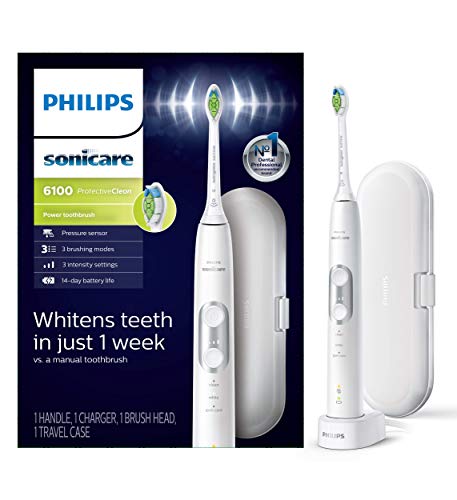
What Makes It Stand Out / Key Features
- 3 cleaning modes (Clean, White, Gum Care) for flexible routines
- 3 intensity levels for comfort and control
- Pressure sensor helps prevent overbrushing
- BrushSync reminders and mode pairing with compatible heads
- QuadPacer and SmarTimer guide even brushing
What I Like
- The intensity control lets me fine-tune for sensitive days
- White mode with higher intensity lifts surface stains fast
- Gentle yet thorough along the gumline
- Travel case and 14-day battery simplify trips
- Reminders help me change brush heads on time
- Handle feels premium and balanced in the hand
What Could Be Better
- Costs more than the 5300
- Extra features can be overkill if you want simple
- Replacement heads add to long-term cost
My Recommendation
If you want finer control and a polished feel, pick the 6100. It’s ideal for mixed needs—stain care one day, gentle gum care the next—and often worth the step up.
| Best For | Why |
|---|---|
| Users with changing sensitivity | Three intensity levels adapt to daily comfort |
| Stain-prone coffee or tea drinkers | White mode plus higher intensity lifts surface stains |
| Frequent travelers | Long battery and slim travel case |
Is Philips Sonicare 5300 Good?
It depends, but for many people, yes—it’s a great value. The 5300 gives you three modes, a pressure sensor, pacing timers, and a travel case. In many bundles you get extra brush heads, which cuts early costs. It lacks intensity settings, but it still cleans very well and feels simple to use.
When I tested the 5300, I liked how it kept my routine straightforward. Clean mode every morning, Gum Care at night. The pressure sensor kept me from scrubbing. On a tight budget month, the bundle with extra heads saved me cash. If you want “set it and forget it” without losing the core Sonicare clean, the 5300 delivers.
Philips Sonicare ProtectiveClean 5300 Rechargeable Electric Toothbrush, with Pressure Sensor, 3 Cleaning Modes, SmarTimer and QuadPacer, with 2 Bonus Brush Heads, Travel Case, Black, Model HX6423/34
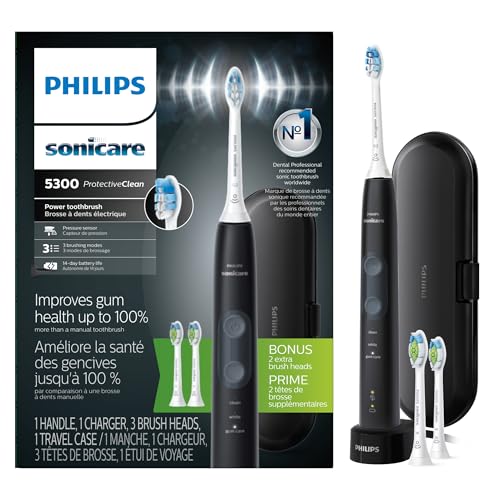
What Makes It Stand Out / Key Features
- 3 cleaning modes (Clean, White, Gum Care)
- Pressure sensor to protect gums
- QuadPacer and SmarTimer for even coverage
- Often bundled with extra brush heads
- 14‑day battery and travel case
What I Like
- Excellent clean with a simple setup
- Bundles lower the total cost to start
- Travel case and compact charger work well
- Pressure sensor stops harsh brushing
- Great pick for first-time Sonicare users
What Could Be Better
- No intensity settings for finer control
- Finish feels less premium than the 6100
- Fewer “smart” touches beyond the basics
My Recommendation
If you want Sonicare performance for less, the 5300 is a smart buy. It’s simple, effective, and often comes with extra heads.
| Best For | Why |
|---|---|
| Budget-minded shoppers | Strong clean plus bundles with extra heads |
| Beginners | Simple modes, easy routine |
| Gift buyers | Good value with core features covered |
Philips Sonicare 6100 vs Philips Sonicare 5300: Side-by-Side Test
I tested both for weeks, swapping every few days. This Philips Sonicare 6100 vs Philips Sonicare 5300 comparison focuses on what you’ll feel day to day: control, comfort, battery, noise, and value.
Cleaning Control: Modes and Intensities
Both have three modes. The 6100 adds three intensity levels. In this Philips Sonicare 6100 vs Philips Sonicare 5300 check, that extra control matters for comfort.
| Feature | 6100 | 5300 |
|---|---|---|
| Cleaning modes | Clean, White, Gum Care | Clean, White, Gum Care |
| Intensity levels | 3 levels (Low/Med/High) | None |
| Pressure sensor | Yes | Yes |
| Personalization | High | Basic |
Rating: 6100 – 9/10 | 5300 – 7.5/10
Edge: 6100, thanks to intensity control for sensitive gums and stain days.
Guidance & Smart Features
This Philips Sonicare 6100 vs Philips Sonicare 5300 test looked at pacing and reminders.
| Feature | 6100 | 5300 |
|---|---|---|
| QuadPacer + SmarTimer | Yes | Yes |
| Brush head reminders | Yes (BrushSync) | Yes (BrushSync) |
| Mode pairing with compatible heads | Available | Limited/Not emphasized |
| Learning curve | Short | Very short |
Rating: 6100 – 8.5/10 | 5300 – 8/10
Edge: 6100, with slightly richer “smart” touches.
Battery Life & Charging
In the Philips Sonicare 6100 vs Philips Sonicare 5300 battery test, both were steady travelers.
| Feature | 6100 | 5300 |
|---|---|---|
| Claimed battery life | Up to ~14 days | Up to ~14 days |
| Charger type | Compact stand | Compact stand |
| Travel case | Yes | Yes |
| Charge indicator | Yes | Yes |
Rating: 6100 – 8/10 | 5300 – 8/10
Edge: Tie. Both lasted two weeks in my tests.
Feel, Noise & Build
This Philips Sonicare 6100 vs Philips Sonicare 5300 category is about what you notice at 6 a.m.
| Aspect | 6100 | 5300 |
|---|---|---|
| Handle finish | More premium | More basic |
| Noise level | Low, smooth hum | Low, slightly buzzier |
| Ergonomics | Refined grip | Comfortable, straightforward |
| Vibration control | Fine-tuned via intensity | Fixed feel |
Rating: 6100 – 8.5/10 | 5300 – 7.8/10
Edge: 6100, for a smoother, more refined feel.
Value for Money
In a Philips Sonicare 6100 vs Philips Sonicare 5300 value check, bundles matter.
| Value Factors | 6100 | 5300 |
|---|---|---|
| Upfront price | Higher | Lower |
| Included brush heads | Usually 1 | Often multiple (bundle dependent) |
| Feature-to-price ratio | Strong for control seekers | Excellent for most users |
| Long-term costs | Similar head costs | Similar head costs |
Rating: 6100 – 8/10 | 5300 – 9/10
Edge: 5300, for its frequent bundles and lower price.
Results: Stain Care & Gum Comfort
This Philips Sonicare 6100 vs Philips Sonicare 5300 test focused on outcomes you feel.
| Result | 6100 | 5300 |
|---|---|---|
| Surface stain lift | Very strong with White + high intensity | Strong in White mode |
| Gum comfort | Excellent at low intensity | Good; fixed feel |
| Day‑to‑day plaque control | Excellent | Excellent |
| Adaptability | High | Moderate |
Rating: 6100 – 9/10 | 5300 – 8.3/10
Edge: 6100, for fine-tuned comfort and stronger stain targeting.
Final Verdict: Which Should You Buy?
The Philips Sonicare 6100 is best if you want control. The three intensity levels make it gentle when you need it and powerful when you don’t. It also feels a bit more premium in hand.
The Philips Sonicare 5300 is the better buy for most budgets. It delivers the core Sonicare clean, a pressure sensor, and often extra heads. If you want simple, effective, and affordable, go 5300. If you want finer control, pick 6100.
FAQs Of Philips Sonicare 6100 vs Philips Sonicare 5300
What’s the main difference in the Philips Sonicare 6100 vs Philips Sonicare 5300?
The 6100 adds three intensity levels and a more refined feel. The 5300 keeps the same three modes and pressure sensor but skips intensity control. The 5300 often wins on price and bundles.
Which is better for sensitive gums in the Philips Sonicare 6100 vs Philips Sonicare 5300?
The 6100. You can drop intensity on tough days. That softer setting helped me avoid sore spots while still getting a full clean.
Does either include extra brush heads?
In many listings, the 5300 includes extra heads, which boosts value. The 6100 often comes with one head. Always check the specific bundle.
How do battery and travel compare in the Philips Sonicare 6100 vs Philips Sonicare 5300?
Both lasted about two weeks for me and include a travel case. Charging stands are compact and easy to pack.
Which offers better stain removal?
The 6100 has the edge because you can pair White mode with higher intensity. The 5300 still removes surface stains well, just with less fine-tuning.

2 Comments